Leafly: Find Cannabis and CBD
- 4.7
- Rating
- 5.00M
- Installs
- Free
- Price

 Analysis by App-foxy
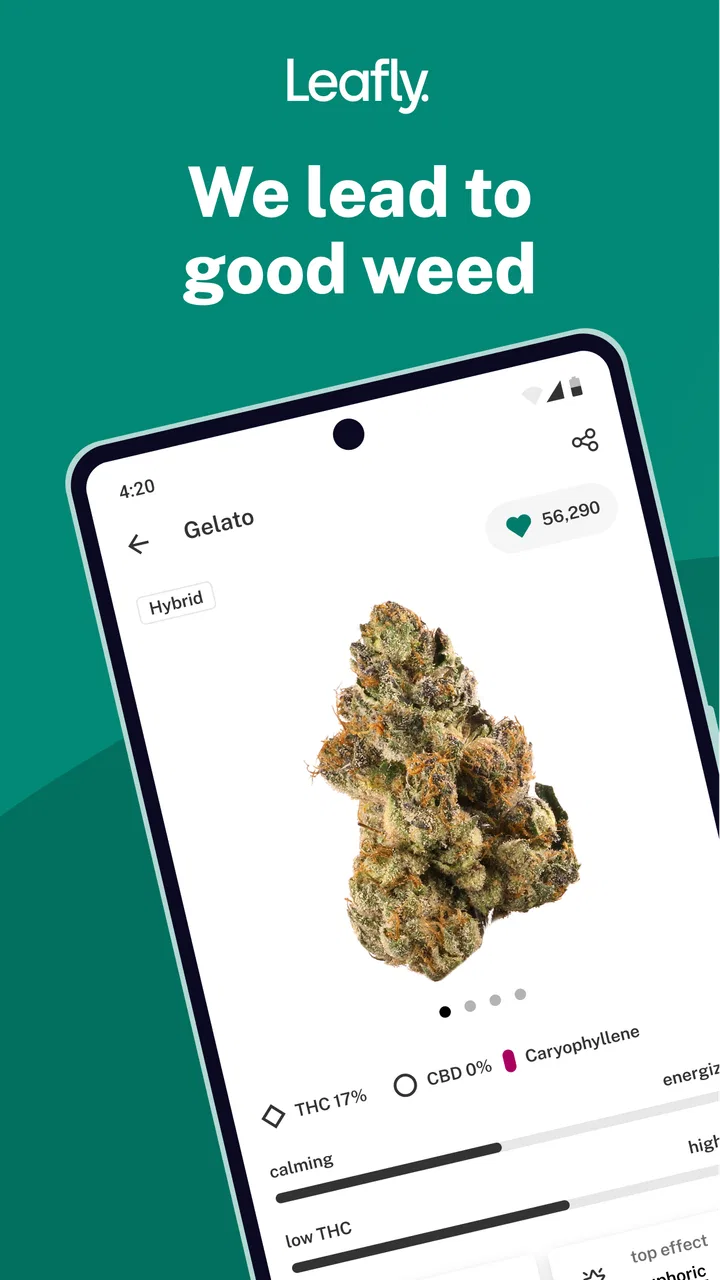
I found Leafly: Find Cannabis and CBD most useful when I treated it as a research and discovery tool rather than a simple shopping app. It brings dispensary discovery, cannabis strain information, and product browsing into one place, which makes it easier to move from “What is available near me?” to “What might suit my needs?” without jumping between unrelated sources. The app is free, belongs to the Medical category, and is developed by Leafly Holdings, Inc.
My overall impression is positive, especially for people who want a more organized way to learn about cannabis before visiting a dispensary. It is not a substitute for medical advice, and it does not remove the need to check local rules, product labels, or a qualified professional. Still, as a companion for comparing options and preparing better questions, it is considerably more useful than relying on memory, random searches, or a quick conversation at the counter.
How I use Leafly from the first search to a dispensary visit
The most practical starting point is the location-based browsing experience. I can use the app to look for nearby dispensaries and then explore what those businesses offer. That matters because availability changes from one area to another, and a strain or product I read about may not be stocked at the shop closest to me. Leafly helps connect general information with the local shopping context, although I still regard the dispensary’s own current menu as the final word before making a trip.
You May Also Like

 AccuWeather: Weather Radar
AccuWeather Review: A Quick, Clear Forecast for Everyday Decisions
For everyday plans, the best forecast is the one you can understand quickly. AccuWeather makes rain timing, radar, and local conditions easy to act on, with a few trade-offs.

 Hill Climb Racing
Why Hill Climb Racing Still Turns Crashes Into One More Run
A tiny car, a bumpy hill and one more upgrade: Hill Climb Racing keeps resurfacing because its simple chaos makes every near-miss feel personal.

 AliExpress - Shopping App
AliExpress Makes Global Shopping Feel Personal, but Shoppers Bear the Risk
AliExpress turns a global marketplace into a pocket-sized discovery engine. Its reach is useful, its shopping loop compelling, and its trade-offs easy to miss.

 Lords Mobile: Kingdom Wars
Lords Mobile Is a Kingdom-Building Routine, Not a Quick Match
A case-by-case verdict on the building, battles, device demands, and social commitments that make Lords Mobile rewarding for some players and exhausting for others.

 PDF Scanner app - TapScanner
TapScanner Makes Paperwork Easier to Capture, Check, and Share
TapScanner makes scanning with a phone feel less like a rescue operation and more like a dependable step in getting work done. Its capture tools are useful, though not flawless.

 Block Blast!
 Shows How Much a Puzzle Game Can Leave Out
A quiet grid game shows why puzzle players increasingly value instant clarity, repeatable skill and low-pressure play—and where the genre still needs to catch up.
More From Our News Desk
View All News


My baseline workflow is simple. I begin with the effect, strain, or product type I want to understand, then narrow my attention to nearby options. Rather than opening every result, I compare a small group and look for details that answer practical questions: Is this something I recognize? Does the description match what I am looking for? Is the dispensary convenient enough to justify checking its menu? This approach keeps the app from becoming an endless scroll through names that sound appealing but tell me little by themselves.
The strain pages are particularly useful for building familiarity with cannabis terminology. A newer user can learn how strains are described, while an experienced user can use the information as a starting point for comparing familiar names. I would not treat any strain profile as a guaranteed personal outcome. Cannabis affects people differently, and the same label does not promise an identical experience across growers, batches, or formats.
One everyday scenario shows where the app earns its place. Imagine that I am planning a dispensary visit after work and want to avoid arriving without a clear idea of what to ask for. I can browse nearby stores, review strain information, note a few candidates, and then use that shortlist during the visit. If one option is unavailable, I have already learned enough about related choices to ask a more focused question instead of starting from zero.
This workflow is also helpful for someone who is trying to remember what worked well in the past. I can use the app’s strain and product information to refresh my vocabulary before speaking with a budtender. That does not create a perfect personal journal, but it reduces the common problem of remembering only a brand name or a vague description while forgetting the characteristics that actually mattered.
Leafly is less compelling if I already have a trusted dispensary, know exactly what I want, and only need to complete a quick purchase. In that situation, the store’s own menu may be faster. The app becomes more valuable when I am comparing locations, learning unfamiliar terms, or trying to turn a broad preference into a manageable shortlist.
What I check before trusting a result
I pay attention to the difference between educational information and local inventory. A strain profile can help me understand a name, but it does not guarantee that a nearby shop has the same product, format, or batch. I also avoid assuming that a familiar strain name means identical quality everywhere. For me, the strongest use of Leafly is preparing for a conversation and organizing possibilities, not making a decision based on one label alone.
I also check the age and legal context before treating the app as relevant to my situation. Leafly carries a Mature 17+ content rating, which is appropriate for a subject involving cannabis, but that rating is not permission to purchase or use anything. Eligibility and local regulations remain separate questions. Anyone under the applicable legal age, or anyone in a place where cannabis access is restricted, should not use the app as a shortcut around those rules.
Another practical habit is to read product language carefully instead of chasing the most dramatic promise. Descriptions can be useful for orientation, yet they are not medical instructions. If I am considering cannabis for a health concern, I would discuss it with a healthcare professional and check the actual product packaging. Leafly can help me arrive at that conversation better prepared, but it should not be the only source guiding a medical decision.
Settings and habits that make browsing less frustrating
The first setting worth checking is location access. Since finding dispensaries is one of the app’s central jobs, inaccurate or unavailable location information can make the browsing experience feel incomplete. I prefer to confirm that the app is searching the area I actually care about, especially when I am planning ahead for a different neighborhood or trip. If I am only researching strains, I do not need to let a local search dominate the whole session.
Notifications are another area where restraint helps. If the app offers alerts on the device, I would keep only the ones that support a real habit and silence anything that turns casual browsing into constant interruption. Cannabis information is something I usually want when I choose to research it, not something that needs to compete with messages and calendar reminders throughout the day.
I also recommend reviewing privacy and account choices before building a long-term routine. Location-based discovery can be convenient, but convenience should be balanced against how much information I want an app to use for personalization. I do not need to share more than is necessary for the task I am performing. For a one-time strain lookup, a lighter approach may be preferable to creating a deeply personalized browsing pattern.
A useful settings habit is to keep the app current. The installed version is 9.1.0, and the minimum operating-system requirement is 7.1. Keeping software updated can reduce avoidable compatibility problems and ensures I am not judging the current experience through an outdated installation. I still check the app after an update rather than assuming that every preference has remained exactly as I left it.
Because menus and local availability can change, I avoid treating saved browsing results as permanent. If I am planning a visit several days from now, I revisit the relevant dispensary rather than relying on an old impression. This is one of the less obvious but important trade-offs: Leafly can make planning more systematic, but cannabis inventory is inherently more temporary than a normal reference article.
Faster patterns for repeat users
Experienced users can save time by separating research sessions from shopping sessions. During research, I focus on strain characteristics, product categories, and terminology. During shopping, I focus on nearby dispensaries and current options. Mixing both goals at once often creates unnecessary browsing, while separating them creates a repeatable routine that is easier to maintain.
I also find it useful to begin with a clear question. “What is nearby?” is one question. “What should I learn about this strain?” is another. “Which options might fit a particular preference?” is a third. Starting with one of these questions helps me avoid being distracted by attractive names or broad recommendations that do not match what I actually need.
A second efficient pattern is to keep a short mental or written shortlist instead of collecting everything. I might compare a few strains or dispensaries, then stop and decide what information is still missing. This makes the app more like a preparation tool than a catalog to browse indefinitely. It also reduces the risk of confusing several similar product names or forgetting why I saved interest in one option.
When I visit a dispensary, I use Leafly to improve the questions I ask rather than to dictate the purchase. I might ask whether the available product matches the strain information I reviewed, whether the format is different, or whether there is a comparable alternative. This is a stronger workflow than showing a screen and expecting the app to make the whole decision. The budtender can address current stock and packaging details that a general profile cannot settle.
For newcomers, the fastest pattern is to learn a few terms at a time. Trying to understand every strain category, product type, and effect description in one sitting is unnecessary. Leafly works better when I use it as a gradual reference: look up an unfamiliar term, compare it with something I already understand, and then stop when I have enough context to make a responsible next step.
There is also value in using the app before an appointment or conversation with a healthcare professional. I can write down the questions that arise while reading, such as whether a product format matters for my situation or whether a claimed effect is relevant to my symptoms. The app does not answer those medical questions reliably on its own, but it can help me identify them. That is a meaningful use case for a Medical-category app, provided I keep its educational role separate from professional guidance.
Where the app reaches its limits
The biggest limitation is that cannabis information is more variable than the clean structure of an app can suggest. Strain names, descriptions, and expected effects are useful reference points, but they cannot capture every difference between products. Growing conditions, formulation, potency, freshness, personal tolerance, and method of use all matter. I therefore treat Leafly as a map of possibilities, not a promise of results.
Local discovery has its own friction. A dispensary may appear relevant while the exact item I want is unavailable, changed, or described differently on its own menu. That means I still verify the store’s current information before traveling. The app can reduce the search burden, but it cannot eliminate the final checking step, and users who expect live inventory to be perfectly synchronized may become frustrated.
The amount of information can also work against clarity. Someone who is new to cannabis may see many strain names and descriptions without knowing which differences are meaningful. In my experience, the solution is not to read everything. It is to choose one practical goal, compare a limited number of options, and ask a professional when the decision involves health, medication, or uncertainty about safe use.
I would skip Leafly if I wanted a purely clinical medication reference, a doctor-led treatment plan, or a guaranteed way to predict how cannabis will affect me. I would also look elsewhere if my only goal were placing an order from one specific dispensary and that business already had a reliable first-party app or website. Leafly’s advantage is breadth and discovery; a dedicated retailer can be better for final transaction details.
The Mature 17+ rating is another reminder that this is not a general-audience lifestyle app. Parents should not assume that a young person can use it simply because it is free. The subject matter is adult-oriented, and responsible use requires attention to age restrictions, local law, safe storage, and personal health circumstances.
Who will get the most from Leafly?
I think the app suits curious adults who want to compare dispensaries and understand cannabis vocabulary before making a choice. It is especially helpful for people who move between different stores, are exploring strains beyond the few names they already know, or want a structured way to prepare for a dispensary conversation.
It can also help experienced consumers who are tired of relying on memory. The benefit is not that the app makes every choice for me. The benefit is that it gives me a repeatable starting point: research a category, inspect nearby possibilities, form a shortlist, and verify the details at the source. That process is modest, but it is much more reliable than making decisions from a vague impression.
The app has built a substantial audience, with a 4.7 average from about 95 thousand ratings and more than 5 million installs. Those figures do not guarantee that every user will like the interface or find every local result equally useful, but they do suggest that Leafly has become a familiar reference point for many people exploring cannabis information.
It is also a good fit for someone who wants a free starting point. There is no purchase price for the app itself, so I can evaluate its usefulness without committing money first. The real cost is attention: I need to filter descriptions, verify local details, and avoid confusing educational content with medical certainty.
My verdict after building a repeatable routine
Leafly works best when I use it with clear boundaries. I research before shopping, check the location and notification behavior, keep a short list, and confirm final details with the dispensary or product packaging. That routine turns a broad cannabis catalog into something practical. It also prevents the most common mistake: assuming that an app profile can replace current local information or personal medical advice.
The app has been available since January 24, 2012, and its continued usefulness comes from combining discovery with education rather than focusing on only one of those jobs. I appreciate that I can begin with a nearby dispensary, move into strain research, and return to a real-world shopping decision without changing tools. The experience is not flawless, but the overall path is coherent.
My recommendation is strongest for adults who want to learn, compare, and prepare. I would not recommend using it as a definitive medical authority, a guarantee of effects, or a replacement for checking local rules and live inventory. Within those limits, Leafly is a practical cannabis research companion that rewards a thoughtful workflow more than aimless browsing.
If I were recommending it to a friend, I would say this: install it if you want help understanding strains and finding dispensaries, but use it as the beginning of a decision, not the final answer. Start with one question, compare only a few relevant options, and verify what is actually available. That is where the app feels most useful, and it is the approach most likely to produce a calmer, better-informed dispensary visit.
FAQs for Leafly: Find Cannabis and CBD
01What is Leafly: Find Cannabis and CBD used for?
Leafly is an informational and discovery app for people interested in cannabis and CBD products. It offers strain information, product descriptions, user reviews, educational articles, and dispensary listings where available. After entering a location, users can browse nearby retailers, check menus, compare products, and learn about reported effects, flavors, and possible uses before making a purchasing decision.
02Can I buy cannabis or CBD directly through Leafly?
Leafly’s purchasing features depend on your location and the participating dispensaries. In supported areas, the app may let you browse menus, view current products, place an online order, or arrange pickup and delivery through a retailer. Leafly itself is generally a marketplace and information platform rather than the seller, so payment, age verification, delivery rules, and order support are handled according to local regulations and the selected dispensary.
03Is Leafly available everywhere, and do I need to verify my age?
Leafly’s content and retail tools are available only where cannabis or CBD services are legally supported, so the experience can vary significantly by country, state, or city. The app may request your location to show relevant dispensaries and products. Because cannabis is age-restricted in many jurisdictions, you should expect age confirmation and must follow all local laws before viewing, ordering, possessing, or consuming products.
04How reliable are Leafly’s strain effects, ratings, and product details?
Leafly provides useful descriptions, community ratings, menus, and educational information, but the details should be treated as guidance rather than a guarantee. Effects can differ between individuals, batches, consumption methods, and cannabinoid or terpene concentrations. Dispensary menus may also change quickly. Always check the product label, laboratory information, retailer details, and local requirements, and avoid relying on app descriptions as medical advice.
05Does Leafly provide medical advice or help me choose a safe product?
Leafly contains educational material that can help users understand cannabis terminology, cannabinoids, strains, consumption methods, and potential effects, but it is not a substitute for a doctor, pharmacist, or qualified cannabis professional. Cannabis and CBD may interact with medications or affect certain health conditions. Before using a product, especially for a medical purpose, speak with a healthcare professional and follow the package instructions and applicable laws.
Pros
- Detailed strain profiles with effects
- flavors
- and user ratings.
- Local dispensary listings make nearby cannabis shopping easier.
- Includes educational articles for beginners and experienced consumers.
- Supports product discovery for both cannabis and CBD users.
- Reviews and ratings can help compare products before visiting a store.
Cons
- Availability and listings vary significantly by location.
- Some features depend on dispensary data being current and accurate.
- Content may feel overwhelming for first-time cannabis users.
- Not all listed products or strains are available in every market.
- Cannabis laws and purchase requirements differ by region and may limit usefulness.

Leafly: Find Cannabis and CBD
Gallery